
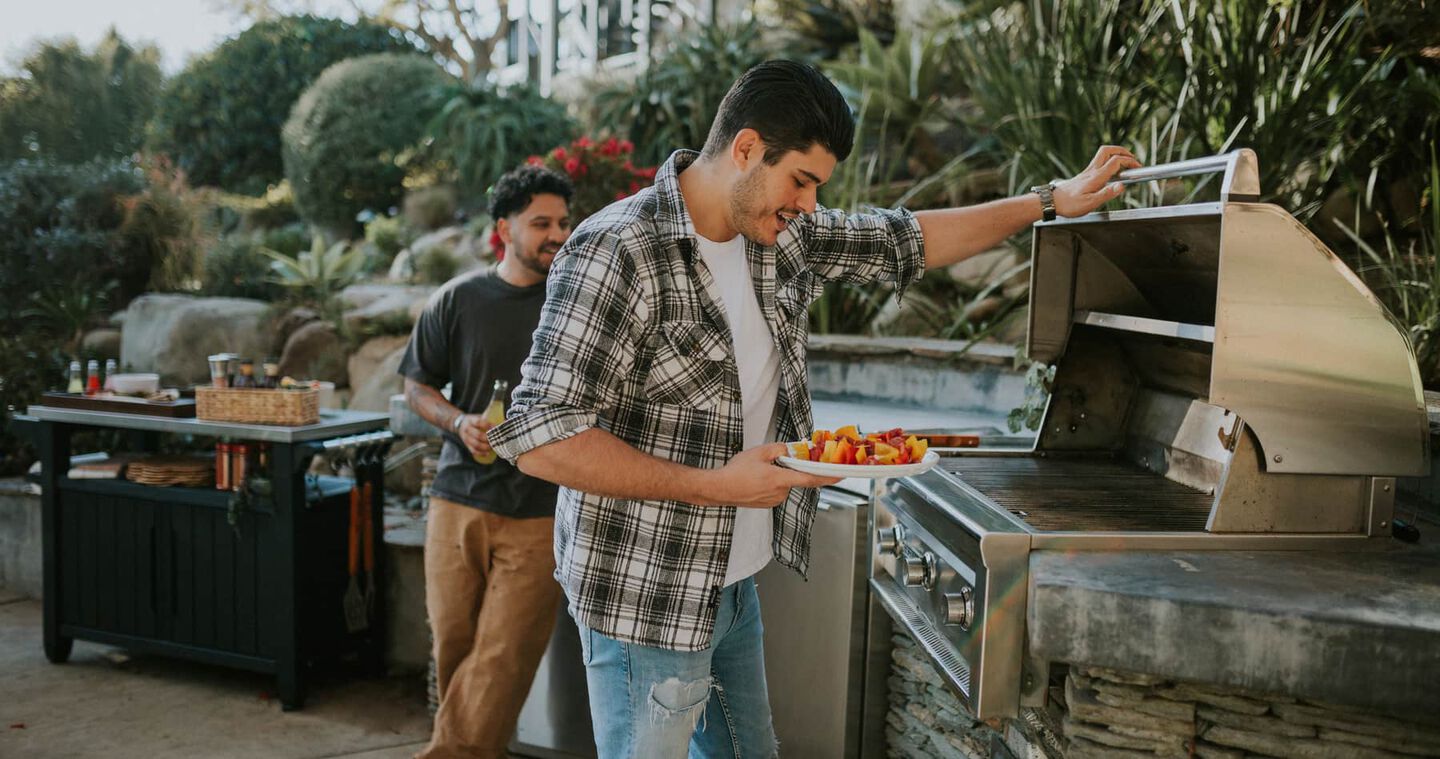

Set up two-zone heat
Before lighting the grill, arrange fuel to create two distinct temperature zones. This setup allows you to sear proteins like filet mignon for flavor, then move them to a cooler area to finish cooking without burning. Burgers and whole chicken rely on this same indirect heat to cook through evenly while retaining moisture.
For a charcoal grill, pile lit coals on one side of the chimney starter or bank them against the outer edge of the grate. Leave the other side empty. For a gas grill, light only the burners on one side. Turn the other burners to low or off. This creates a hot zone for searing and a cool zone for gentle cooking.
Use a grill thermometer or the hand test to verify the temperature difference. The hot side should be around 450°F to 500°F for a good sear. The cool side should sit between 250°F and 300°F for indirect cooking. If you hold your hand over the hot zone, you should only be able to keep it there for 2–3 seconds. Over the cool zone, it should stay for 5–6 seconds.
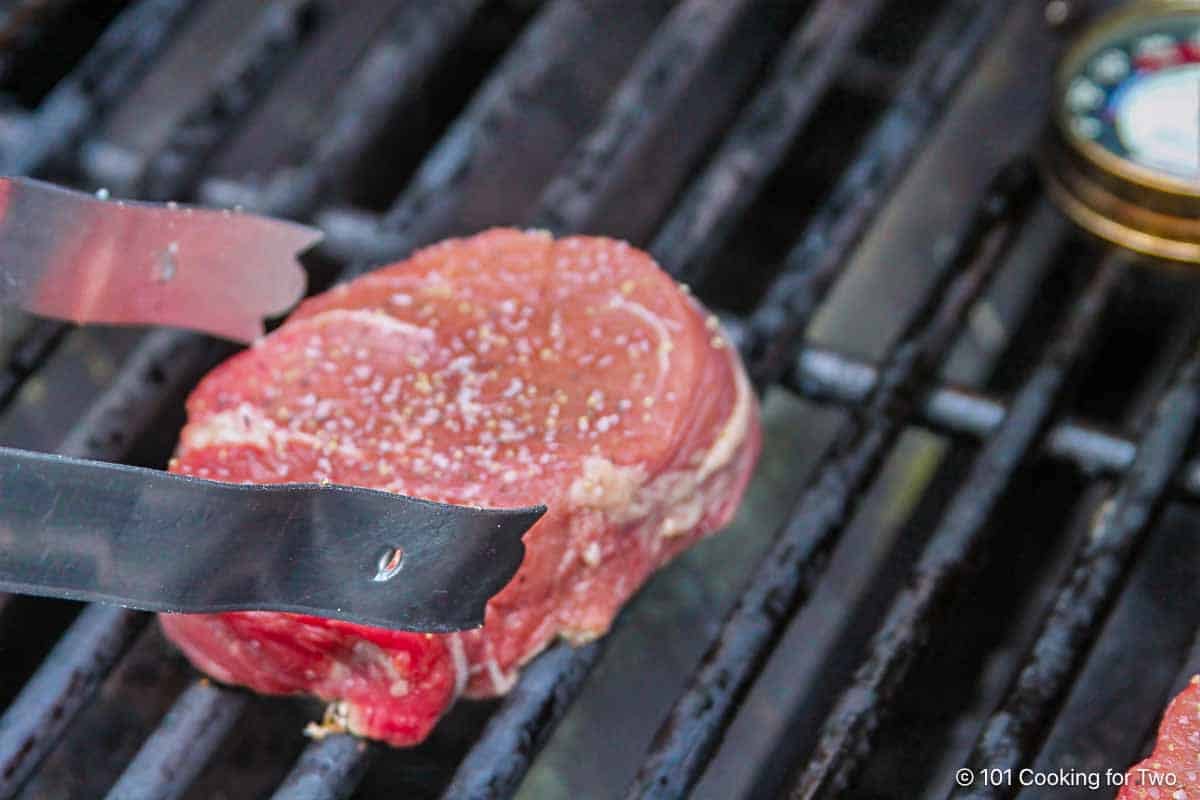
Grill filet mignon with the rule of 3
Filet mignon is a tender, lean cut that benefits from high heat but burns easily. The "Rule of 3" is a simple framework for cooking 1-inch steaks to medium-rare without overcooking the center or charring the outside. It balances searing for flavor with indirect heat for even cooking.
Start by patting the steak dry and seasoning it generously with salt and pepper. Let it sit at room temperature for 15 minutes while you prepare the grill for two-zone cooking. Light one side of the grill to high heat and leave the other side off or on low. This creates a hot searing zone and a cooler finishing zone.
This method works best for steaks that are about 1 inch thick. Thicker cuts may require additional time on the cool side, while thinner cuts might cook too fast. Use a meat thermometer to check the internal temperature for accuracy.
Cook burgers without pressing them
Pressing down on a burger with a spatula is the fastest way to ruin it. That action squeezes out the melted fat and juices that keep the meat tender, leaving you with a dry, flat patty. It also causes flare-ups as the rendered fat hits the open flame, charring the exterior before the inside is cooked through.
Keep the patty flat and let the grill do the work. A good sear comes from contact with hot metal, not from applying weight. Flip the burger only once, when the bottom has developed a deep brown crust and releases easily from the grate.
Roast whole chicken indirectly
A whole chicken is dense and uneven, making direct high heat a recipe for burnt skin and raw breasts. Indirect heat solves this by surrounding the bird with steady, ambient warmth. This method roasts the chicken evenly, keeping the meat juicy while ensuring the thickest parts reach a safe temperature.
Trussing the bird is the first critical step. Tucking the wings and tying the legs creates a compact shape. This prevents the thin wingtips from charring and ensures the heat circulates evenly around the cavity. A trussed chicken acts like a self-basting roaster, retaining moisture far better than a loose one.
Set up your grill for two-zone cooking. Light the charcoal on one side or turn on only the burners on one side. The unlit side becomes your indirect zone. Place a drip pan under where the chicken will sit to catch fat and prevent flare-ups. The goal is a steady 350°F to 375°F ambient temperature.
For precise timing guidelines, refer to the Weber Grilling Guide, which outlines how altitude and wind can affect cook times. Always rely on a thermometer rather than time alone, as grill temperatures can fluctuate.
Check doneness with a thermometer
Visual cues like color or firmness are unreliable for thick cuts like filet mignon or whole chicken. A meat thermometer is the only way to guarantee food safety and precision. Relying on guesswork often leads to dry meat or, worse, undercooked poultry.
Insert the probe into the thickest part of the meat, avoiding bone or fat. For chicken, check the thickest part of the breast and the inner thigh. For steaks, place it in the center. Wait a few seconds for the reading to stabilize.
Use these safe minimum internal temperatures as your guide:
Let the meat rest for 3-5 minutes after removing it from the grill. The internal temperature will rise slightly during this time, ensuring juices redistribute evenly.
Quick Grilling Checklist
Use this reference while you cook to keep filet mignon, burgers, and whole chicken on track. Times are estimates; trust your thermometer.
Filet Mignon
- Pat dry and season generously.
- Sear 2 minutes per side over high heat.
- Move to indirect heat to finish.
- Target 130°F for medium-rare.
- Rest 5 minutes before slicing.
Burgers
- Make an indent in the center of each patty.
- Flip only once to keep juices in.
- Target 160°F for ground beef.
- Add cheese in the last minute.
- Toast buns cut-side down briefly.
Whole Chicken
- Truss legs and tie wings close.
- Oil the skin and salt inside and out.
- Start breast-side down, then flip.
- Target 165°F in the thickest thigh.
- Rest 15 minutes before carving.
-
Clean and oil grates
-
Preheat to target temp
-
Set up two zones (hot/cool)
-
Have thermometer ready
-
Bring meat to room temp
No comments yet. Be the first to share your thoughts!